
Introduction
The idea of vehicles operating without human drivers has fascinated society for decades due to the promise of safer roads smoother traffic flow and increased personal freedom. Although media coverage often suggests that autonomous vehicles are just around the corner many people still question when this technology will truly become part of everyday life. Understanding this shift requires a closer look at the technology behind autonomous systems the challenges slowing progress and the realistic timelines for adoption. This guide provides a detailed explanation of how Self Driving Cars are evolving and what factors will determine their mainstream use.
Table of Contents
What Are Self Driving Cars
At their core Self Driving Cars are vehicles capable of navigating roads without direct human control. These vehicles rely on a sophisticated combination of sensors cameras artificial intelligence and digital maps to perform driving tasks such as steering braking and acceleration. Instead of a human driver making decisions the onboard systems analyze real time data to respond to traffic signals obstacles and changing road conditions.

Think of this technology as a digital driver that constantly monitors its surroundings and makes calculated decisions similar to how a human driver reacts to the environment. However not all autonomous vehicles function at the same level. Some systems can operate independently only in specific situations while others still require full driver attention. The ultimate goal is a vehicle that can transport passengers safely and reliably without human involvement under any conditions.
Also Check: AI Hospitals in China: Tsinghua Agent Hospital 2025 Developments
Levels of Autonomous Driving Explained
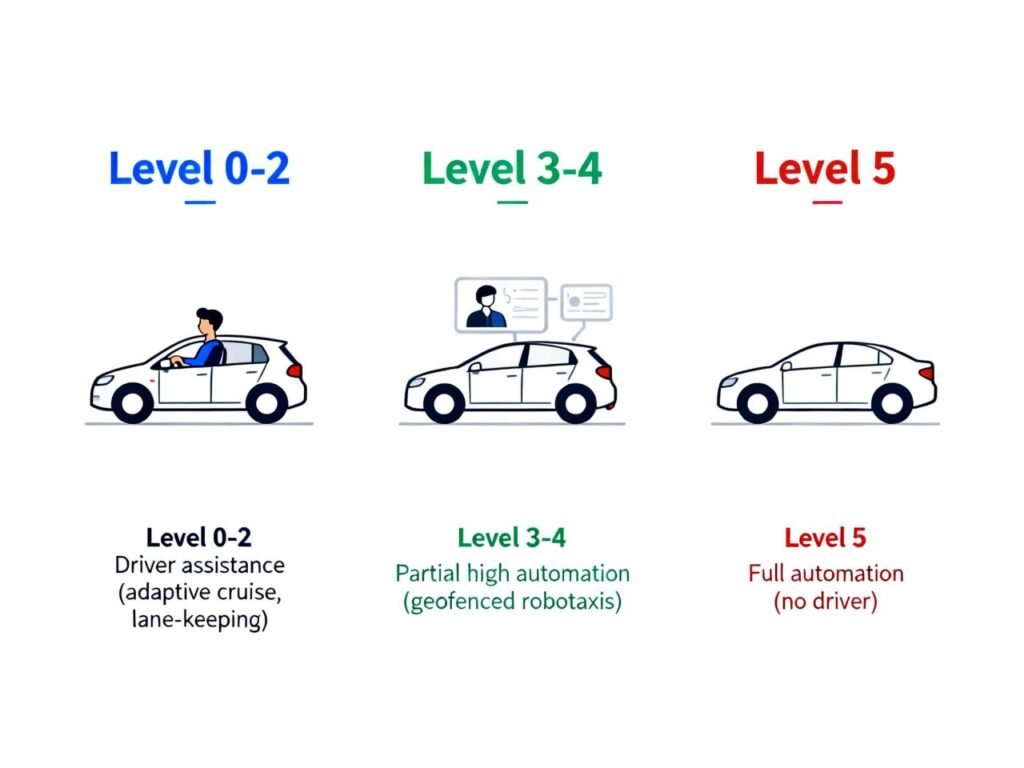
Level 0 to Level 2 Driver Assistance
Most vehicles on the road today fall within this category. Features such as adaptive cruise control lane keeping assistance and automatic emergency braking support the driver but do not replace them. Full responsibility remains with the human driver.
Level 3 to Level 4 Partial to High Automation
At these levels vehicles can handle more complex driving tasks. A Level 3 system can manage highway driving but may request human intervention when conditions change. Level 4 vehicles can operate independently within specific geographic zones such as robotaxi services operating in selected cities.
Level 5 Full Automation
Level 5 represents complete autonomy where no human driver is required in any situation. These vehicles can operate in all environments without steering wheels or pedals. Currently this level remains experimental and unavailable for public use.
Understanding these levels is critical because discussions around when Self Driving Cars become mainstream often depend on which level of autonomy is being considered.
Current State of Self Driving Technology
Major Companies Leading the Way
Several technology and automotive companies are shaping the future of autonomous transportation. Waymo operates robotaxi services in select US cities while Tesla continues to expand its Full Self Driving software at Level 2. Other major contributors include Cruise Baidu Nvidia and Aurora all investing heavily in autonomous research.
Key Technologies Powering Autonomy
Artificial intelligence and machine learning process vast amounts of driving data in real time. Sensors and LiDAR provide a complete view of the surroundings while GPS and high definition maps ensure precise navigation. Emerging 5G networks further enhance communication between vehicles and infrastructure.
Real World Testing and Pilot Programs
Autonomous vehicles are already being tested in cities such as San Francisco Beijing and Phoenix. Pilot programs allow passengers to experience driverless rides under controlled conditions. Despite promising results these programs remain limited by regulations safety considerations and environmental factors.
Benefits of Self Driving Cars
Improved Road Safety
Human error causes the majority of traffic accidents. Autonomous systems can reduce collisions by reacting faster remaining attentive and consistently following traffic laws.
Reduced Traffic Congestion
Vehicles that communicate with each other can optimize traffic flow and minimize delays at intersections leading to more efficient urban transportation.
Greater Accessibility
Autonomous vehicles can provide independence to elderly individuals people with disabilities and those unable to drive giving them greater mobility and freedom.
Environmental Impact
When combined with electric technology autonomous driving can reduce emissions by optimizing acceleration braking and route planning.
Challenges Slowing Mainstream Adoption
Technical Limitations
Complex scenarios such as unexpected road hazards construction zones and extreme weather remain difficult for autonomous systems to handle reliably.
Regulatory and Legal Barriers
Autonomous vehicle laws vary widely by region. Governments must establish clear frameworks addressing safety liability and licensing before widespread adoption can occur.
Safety and Liability Concerns
Determining responsibility in the event of an accident remains a major obstacle. Clear accountability must be established among manufacturers software developers and vehicle occupants.
Public Trust and Perception
High profile incidents have increased public skepticism. Building trust will be just as important as improving technology.
Timelines and Predictions
Expert Forecasts
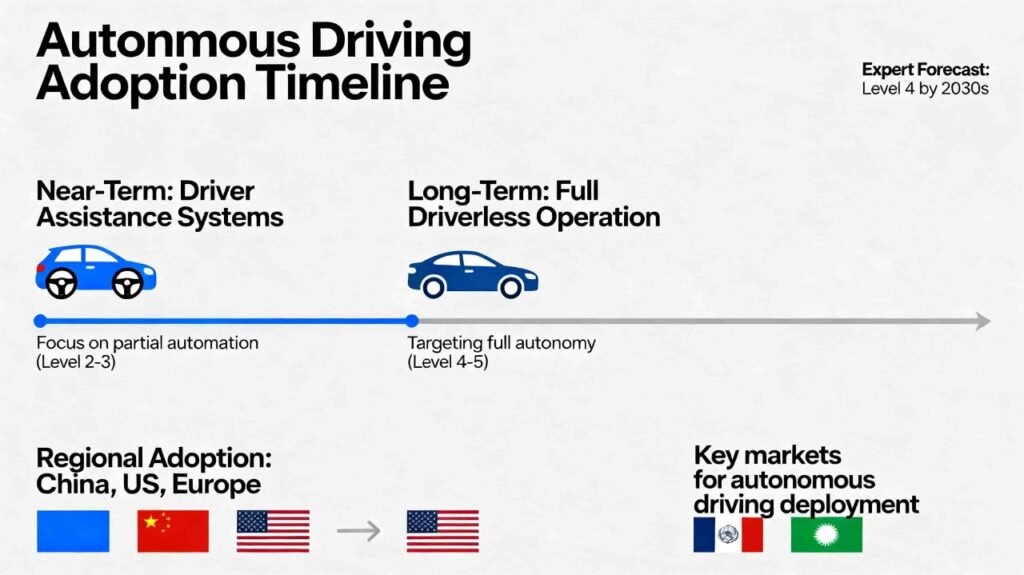
While early predictions suggested full autonomy by 2020 most experts now believe Level 4 vehicles may expand during the 2030s. Level 5 autonomy is expected to take significantly longer.
Regional Differences
China and the United States lead in pilot deployments while Europe focuses heavily on regulation. Adoption rates will vary greatly by region.
Near Term and Long Term Outlook
Advanced driver assistance features will continue improving in consumer vehicles while fully autonomous systems may first dominate ride hailing and logistics sectors.
Factors That Will Accelerate Adoption
Advances in Artificial Intelligence
Improved algorithms allow systems to better handle rare and complex driving scenarios.
Supportive Government Policies
Clear regulations financial incentives and safety standards can speed up deployment.
Industry Partnerships
Collaboration between technology firms and automakers accelerates innovation and commercialization.
Infrastructure Development
Smart roads connected traffic systems and 5G networks enhance vehicle awareness and responsiveness.
Real World Case Studies
Waymo Robotaxi Services
Waymo operates autonomous taxi services allowing passengers to travel without a human driver in select cities.
Tesla Full Self Driving Strategy
Tesla collects extensive driving data to improve its autonomous features though vehicles still require driver supervision.
Autonomous Trucks in Logistics
Companies like TuSimple and Aurora test self driving trucks on highways where conditions are more predictable offering strong economic benefits.
How Consumers Can Prepare for the Future
Staying Informed
Understanding local laws and safety standards helps consumers adapt to changing mobility policies.
Learning the Technology
Knowing how autonomous features work improves safety and confidence.
Embracing Flexible Mobility
Ride sharing subscriptions and autonomous shuttles may reshape vehicle ownership models.
Overview Table
| Aspect | Details |
| Technology Focus | Autonomous Driving Systems |
| Current Adoption Level | Level 2 to Level 4 |
| Main Use Cases | Ride hailing logistics pilot cities |
| Key Challenges | Regulation safety trust |
| Expected Expansion | 2030s |
Tech 2 Innovation Role:
Tech2innovation plays an important role in explaining the future of Self Driving Cars by presenting complex concepts in a clear and structured format for readers. This post on tech2innovation breaks down automation levels timelines benefits and challenges in a way that helps users understand realistic adoption expectations. Instead of relying on speculation tech2innovation focuses on verified developments and real world case studies. The article connects technology policy and consumer readiness to provide a balanced perspective often missing from generic discussions. By organizing technical information into accessible sections tech2innovation helps readers stay informed about how autonomous mobility will impact everyday life. This approach ensures clarity trust and long term relevance for technology focused audiences.
Conclusion
Self Driving Cars are advancing steadily but their journey to mainstream adoption is more gradual than once expected. While advanced driver assistance features are already common fully autonomous vehicles still require technological regulatory and societal readiness. Initial adoption will likely occur in specific industries such as logistics and ride hailing before expanding to personal ownership. Whether this transformation becomes widespread in the 2030s or later it will fundamentally reshape how people move work and interact with transportation systems.
Reference: https://www.weforum.org/stories/2025/05/autonomous-vehicles-technology-future/