
Introduction
Artificial intelligence is now accessible to small businesses and not only large tech companies. AI ROI for Small Business supports growth by increasing sales, reducing costs, and improving customer satisfaction. The challenge is measuring success. AI ROI for Small Business help determine whether AI tools deliver real value. This guide explains AI ROI in a clear and practical way.
What is AI ROI for Small Business
Return on investment ROI is one of the most important financial indicators. It shows whether your spending is generating profit. ROI compares the benefits of an investment with its cost. When the return is higher than the expense, the investment is moving in the right direction.
For small businesses, ROI is essential for survival. Limited budgets and resources require careful spending. Tracking ROI supports smarter decisions by providing evidence instead of guesswork. For example, if you invest 1000 dollars in an AI powered email marketing tool and it generates 3000 dollars in new sales, the ROI is positive. If the tool costs more than the revenue it produces, the investment is not beneficial.
In simple terms, ROI helps small businesses measure value, eliminate waste, and focus on what drives growth. In the context of AI, ROI confirms whether the technology delivers measurable outcomes rather than being a trend.
What Are AI Metrics
AI metrics are the measurements used to evaluate the performance of artificial intelligence tools in a business. They act as a scoreboard that shows whether AI is helping your business succeed.
Unlike general ROI, which measures overall profit, AI metrics focus on specific outcomes such as cost reduction through automation, increased revenue from personalized recommendations, or faster chatbot response times. These metrics are practical and not limited to technical experts. For example, comparing customer satisfaction ratings before and after implementing an AI chatbot shows whether service quality improved.
Some AI metrics overlap with traditional business indicators like customer lifetime value or revenue growth. Others, such as time to value which measures how quickly results appear after AI adoption, are specific to AI.
By tracking AI metrics, small businesses can separate hype from reality. You understand exactly how AI affects financial performance, justify investments, and refine strategies to maximize results.
AI in Gastroenterology Research Review and Clinical Insights
Why Measure AI ROI for Small Business
AI offers promising benefits, but not every tool delivers equal value. Measuring ROI ensures that investments are justified and that AI solutions support business goals.
Small businesses have limited resources. Every subscription, training fee, and workflow change has a cost. Without tracking outcomes, money may be wasted. ROI metrics serve as a guide that highlights what works and what does not.
Measuring AI ROI for Small Business for Small Business also builds confidence. Instead of relying on assumptions, you have evidence that AI improves performance. This supports team adoption, funding approvals, and long term planning. Employees are more willing to embrace AI when they see measurable productivity improvements.
Adopting AI is an ongoing process. Measuring AI ROI for Small Business helps identify trends, adjust strategies, and evaluate success as the business evolves. Without measurement, using AI is like driving at night without headlights.
In summary, measuring AI ROI for Small Business ensures that AI works for your business and supports your time and budget.
Key AI ROI for Small Business for Measuring ROI
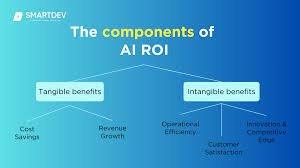
1. Cost Savings
Cost reduction is one of the most noticeable benefits of AI. Automation reduces labor costs, eliminates repetitive tasks, and decreases errors. For example, an AI chatbot may reduce the need for a full time support representative. Measuring payroll changes or reduced error rates reveals clear cost savings.
2. Revenue Growth
AI increases sales through better targeting and personalization. Recommendation engines encourage users to purchase more products, raising the average order value. Comparing sales data before and after AI integration shows whether the technology contributes to new revenue streams.
3. Customer Acquisition Cost CAC
CAC measures the cost of acquiring a new customer. AI can improve targeting, optimize ad spend, and reduce the cost per lead. When CAC declines, the ROI of AI powered marketing tools increases.
4. Customer Lifetime Value CLV
CLV calculates total revenue earned from a customer over the course of their relationship with your business. AI enhances CLV by improving retention, forecasting behavior, and offering personalized incentives. An AI powered loyalty program that increases repeat purchases signals positive ROI.
5. Lead Conversion Rate
AI supports lead nurturing through predictive scoring, automated emails, and chatbots. These tools move prospects toward purchasing faster. Tracking conversion rates shows whether AI improves the sales process. Even small conversion increases create significant revenue growth.
6. Employee Productivity
AI enhances productivity by handling repetitive tasks and allowing employees to focus on more valuable work. Measuring task completion time, reduced errors, and output per employee helps determine productivity improvements. Higher efficiency indicates ROI.
7. Customer Satisfaction and Retention
AI driven tools such as personalized recommendations and chat support improve customer experience. Monitoring satisfaction ratings, reviews, and repeat purchase rates shows whether AI contributes to stronger customer relationships.
8. Time to Value
Time to value measures how quickly AI delivers meaningful outcomes. Small businesses need fast results. When AI tools generate measurable gains in weeks or months, the technology is considered effective. Track the period between implementation and the first positive outcome.
Together, these metrics provide a full picture of AI ROI. Some show long term impact like CLV, while others offer short term gains like reduced costs. Choosing the right mix helps small businesses make smarter decisions.
How to Track AI ROI for Small Business Effectively
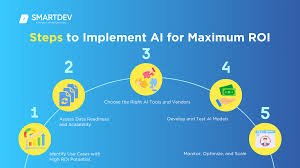
1. Define Clear Business Goals
AI should support your business goals. Identify whether you aim to reduce customer service costs, improve marketing results, or increase sales. Clear goals make ROI tracking accurate and meaningful.
2. Choose the Right AI Tools
Select AI tools that align with your objectives. If improving customer service is the priority, invest in chatbots or sentiment analysis tools. If marketing is the focus, choose AI driven ad optimization. Select tools that address real business needs.
3. Set Baseline Metrics Before AI Implementation
Before adopting AI, record existing data such as response time, monthly sales, or employee hours spent on tasks. These baseline values allow you to measure improvements after implementation.
4. Use Dashboards and Analytics Platforms
Tracking metrics manually is time consuming. Use built in dashboards or analytics platforms to visualize performance changes. For example, AI enabled CRM systems can display updated conversion rates.
5. Monitor Short Term and Long Term Impact
Some AI tools show instant results, while others take time. Track both immediate improvements and long term changes. Do not assume AI is ineffective if results take time to appear.
6. Regularly Review and Adjust Strategy
AI requires continuous management. Review performance regularly and adjust strategies when necessary. Modify usage, provide more training, or select a different tool if results are not meeting expectations.
Effective tracking requires preparation, the right tools, and continuous review. Small businesses can measure AI ROI confidently and use insights to make informed decisions.
Benefits of Tracking AI ROI for Small Business
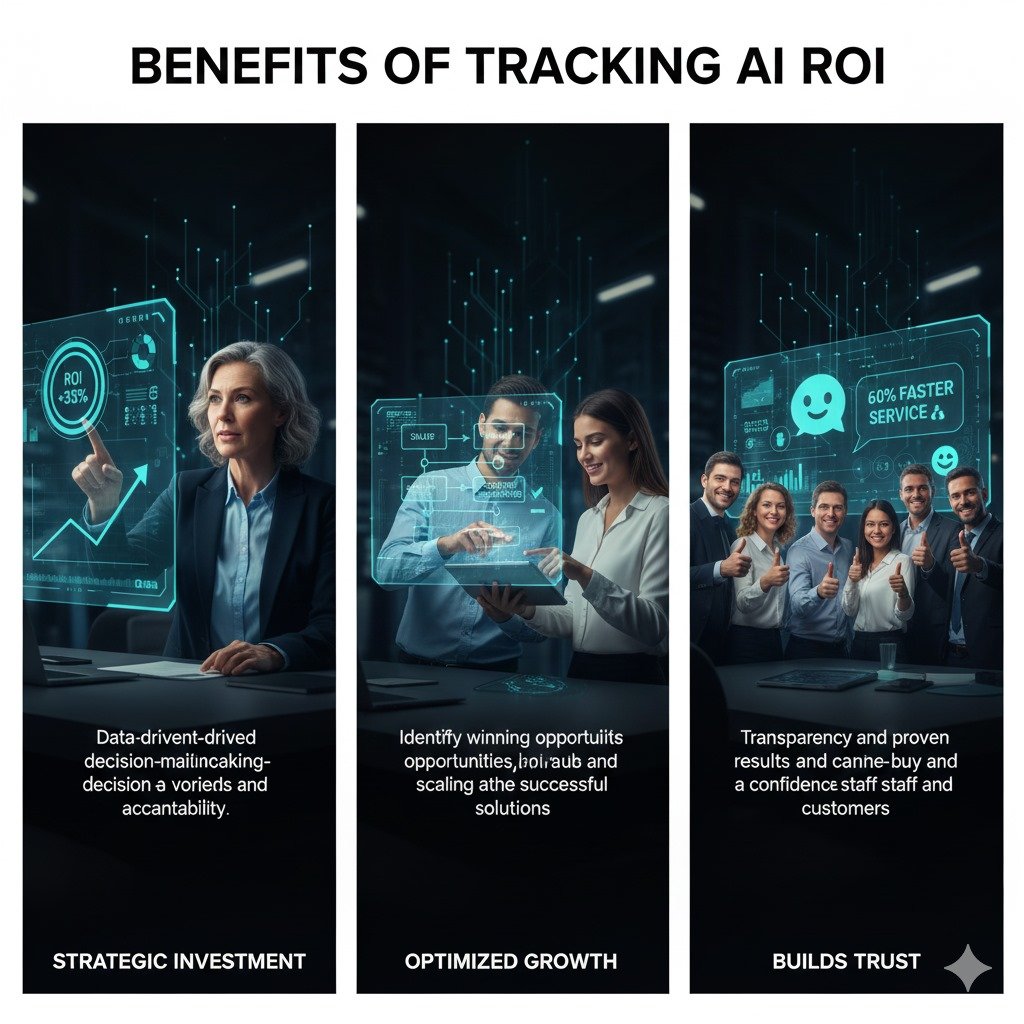
Tracking AI ROI improves more than finances. It enhances accountability by showing exactly where money is spent and whether it produces value. This reduces waste and increases confidence in decision making.
ROI tracking also reveals opportunities. By identifying high performing AI tools, businesses can expand successful solutions and discontinue low performing ones. This increases efficiency and supports long term growth.
Tracking ROI strengthens trust among employees, customers, and stakeholders. Employees see that AI reduces workload and improves productivity. Customers experience better service. Stakeholders receive proof of the value created by their investments.
In summary, tracking AI ROI unlocks growth, confidence, and long term success.
Challenges in Measuring AI ROI for Small Businesses
1. Limited Budgets and Resources
Small businesses may lack the budget for advanced analytics or specialized staff. This can make tracking ROI difficult. The solution is to begin with free or low cost tools and focus on core metrics.
2. Data Quality Issues
Accurate data is essential for reliable AI outcomes. Inconsistent or outdated customer information can distort ROI calculations. Businesses must organize and clean their data before expecting precise results.
3. Lack of Technical Expertise
Without internal expertise, interpreting AI results may be challenging. Working with vendors, hiring consultants, or using user friendly platforms can help bridge this gap.
4. Difficulty Linking AI to Profitability
AI sometimes produces indirect effects. For example, a chatbot may improve satisfaction without increasing sales instantly. Measuring ROI requires patience and connecting AI usage to broader business outcomes.
Understanding these challenges in advance helps businesses prepare solutions and track AI ROI successfully.
Best Practices for Maximizing AI ROI for Small Business
1. Start Small and Scale Later
Begin with one AI project instead of adopting multiple tools at once. For example, start with an AI chatbot before implementing marketing automation. This reduces risk and supports early success.
2. Focus on High Impact Use Cases
Choose areas where AI can produce measurable results, such as marketing, inventory management, or customer service.
3. Involve Employees in AI Adoption
Employees may resist AI if they feel threatened. Engage them early and show how AI reduces repetitive tasks. Adoption increases when employees understand the benefits.
4. Balance Automation with Human Oversight
AI is powerful but not flawless. Human input is required for complex tasks and sensitive customer interactions. This balance prevents errors and ensures quality.
5. Partner with AI Experts or Vendors
Small businesses do not need to solve every challenge independently. AI vendors and consultants can provide guidance and help interpret ROI metrics.
By following these practices, businesses can maximize AI ROI while minimizing risks.
Real World Examples of AI ROI for Small Business
1. Local Retail Store
An online clothing boutique used AI powered product recommendations. Within three months, the average order value increased by 20 percent, resulting in a strong ROI.
2. Café and Restaurant
A small café used an AI scheduling tool to optimize staff shifts. Labor costs decreased by 15 percent without affecting service quality. The savings covered the cost of the tool in less than two months.
3. Digital Marketing Agency
A small agency used AI for ad targeting. Campaign accuracy improved, reducing customer acquisition costs by 25 percent and increasing revenue.
4. Plumbing Service Business
A plumbing company added an AI chatbot to its website. The bot handled after hours inquiries and scheduled jobs automatically. Missed calls decreased and conversions increased by 18 percent.
5. Health and Wellness Studio
A yoga studio used AI to create personalized email campaigns. Member retention increased as customers renewed memberships and attended more sessions. Customer lifetime value rose significantly.
These examples show that AI ROI for Small Business applies to many industries. Whether it is retail, services, or marketing, AI can deliver measurable and meaningful results.
Pingback: Can AI Bias in Hiring A Complete Analysis 2026
Pingback: AI Replace Doctors Will Artificial Intelligence Replace Doctors in Healthcare 2025