
Objective
This review collected evidence on how artificial intelligence AI in Gastroenterology is applied. The study analyzes the use of AI from two major perspectives including different types of endoscopic technologies and various gastrointestinal diseases. It also outlines key challenges and future research directions in this domain.
Background
With the rapid growth of computational power and an increasing volume of available medical data,AI in Gastroenterology development has accelerated. Machine learning ML techniques have become central to endoscopic image analysis. AI tools are now widely used to support clinicians by enhancing accuracy and efficiency in gastrointestinal endoscopy and reducing clinical workload.
Methods
The PubMed database was searched using keywords related to AI, ML, deep learning DL, convolutional neural networks, and several endoscopic methods including white light endoscopy WLE, narrow band imaging NBI, magnifying endoscopy with narrow band imaging ME NBI, chromoendoscopy, endocytoscopy EC, and capsule endoscopy CE. Relevant studies were reviewed and discussed in detail.AI Hospitals in China: Tsinghua Agent Hospital 2025 Developments
Conclusions
This review summarizes the fundamental concepts of AI, ML, and DL, and presents applications of AI across multiple endoscope types and gastrointestinal diseases. It also highlights existing challenges and prospects for clinical AI adoption. While AI has solved some clinical problems, further advancements and broader clinical integration are still necessary.
Introduction
Artificial intelligence originated in the 1950s during the Dartmouth Conference where researchers aimed to design machines capable of replicating human cognitive processes. AI refers to computational methods that imitate or extend human intelligence, enabling machine based reasoning. Over the past 70 years, AI has expanded into healthcare, finance, education, and many other domains.
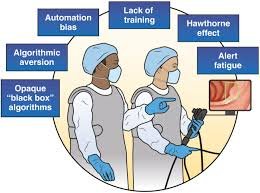
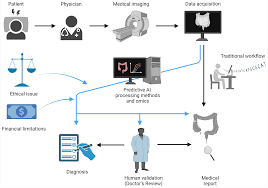
AI in gastroenterology, physicians interpret large volumes of endoscopic images, creating fatigue and limiting diagnostic accuracy. To support clinical workflows and improve decision making, AI based tools have been developed to automatically segment lesions and analyze endoscopic images. These technologies assist in diagnosis, treatment planning, and prognosis evaluation. However, AI development in gastrointestinal medicine faces challenges including data acquisition, cleaning, and standardization. Clinical acceptance by medical staff also plays a key role in the adoption of AI systems.
This review introduces the classification of AI techniques and evaluates AI applications in two areas: different types of endoscopes and various gastrointestinal diseases. It also discusses the main challenges and future directions for AI in gastroenterology.
This article follows the Narrative Review reporting checklist.
Methods
English language literature published between 2000 and 2020 was searched through PubMed. Keywords included AI, ML, DL, convolutional neural networks CNN, endoscopy, WLE, NBI, ME NBI, chromoendoscopy, EC, and CE. Studies directly involving AI applications in gastrointestinal medicine were manually screened and included.
AI
AI has advanced rapidly with improvements in computational capabilities and cross disciplinary contributions. Machine learning emerged in the 1980s as a key component of AI. Deep learning later evolved as a more sophisticated branch, offering powerful feature extraction and pattern recognition capabilities.
Machine Learning ML
ML integrates statistics, probability, and computer science. It learns patterns from data and improves performance through iterative training. ML includes three primary methods:
• Supervised learning uses labeled data
• Unsupervised learning identifies patterns in unlabeled data
• Reinforcement learning optimizes behaviors through trial and reward without labeled data
ML techniques such as decision trees, support vector machines, and regression models are widely used in medical research. These algorithms support classification, prediction, and diagnostic tasks, including real time polyp detection and cancer metastasis prediction.
Deep Learning DL
DL outperforms traditional ML in large data environments due to its automated feature extraction using neural network architectures. DL models use multiple hidden layers to refine results and can be trained using supervised or unsupervised learning. CNN based applications and generative adversarial networks are examples of DL approaches used in medical imaging.
Types of AI in Gastroenterology Endoscopy
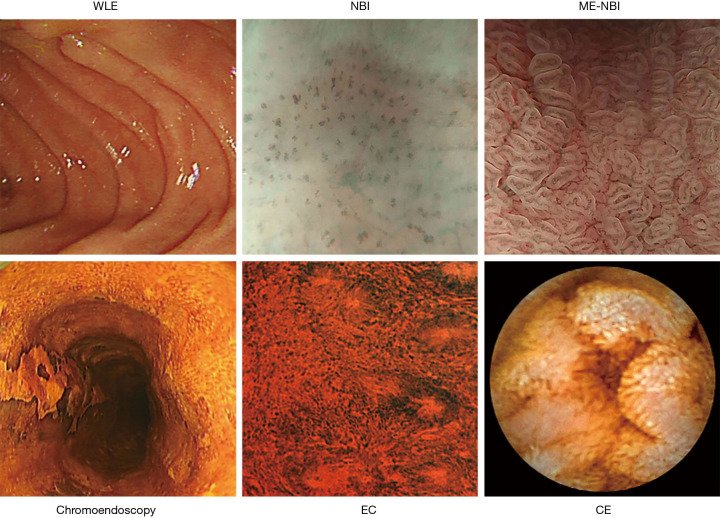
AI in Gastroenterology based analysis of endoscopic images has emerged as one of the most promising medical applications. Endoscopy allows minimally invasive visualization of internal structures and supports early detection of gastrointestinal neoplasms. Common endoscope types include:
• WLE
• NBI
• ME NBI
• Chromoendoscopy
• EC
• CE
WLE
WLE is widely used because it is cost effective and fast but can struggle to detect small precursor lesions. Research has explored AI methods for classifying disease activity and invasion depth, with supervised CNN models achieving high accuracy in gastric neoplasm classification.
NBI Endoscopy
NBI enhances visualization of mucosal and microvascular structures by using filtered wavelengths. AI systems developed for NBI images have shown strong performance in polyp detection, pathology prediction, and microvascular assessment.
AI Development
ME NBI
ME NBI combines magnification and NBI technology, enabling detailed visualization of mucosal capillary patterns. AI systems trained on thousands of ME NBI images show high accuracy for identifying early cancer and classifying intrapapillary capillary loops.
Chromoendoscopy
Chromoendoscopy uses dye to enhance mucosal contrast and improve detection of lesions. CNN models trained on chromoendoscopic images have demonstrated high sensitivity and outperform traditional endoscopy in some studies.
Endocytoscopy EC
EC provides microscopic imaging of the digestive tract. AI in Gastroenterology models built on EC images have achieved strong accuracy in distinguishing malignant from nonmalignant lesions. However, extreme magnification levels may limit performance.
Capsule Endoscopy CE
CE ( AI in Gastroenterology ) allows visualization of the small bowel using a swallowable capsule equipped with a camera. AI models trained on CE images have shown outstanding accuracy for detecting angioectasia, ulcers, and colorectal lesions.
Application of AI in Gastrointestinal Diseases
AI contributes to diagnosing and managing upper gastrointestinal, small intestinal, and large intestinal diseases. Applications include cancer detection, lesion classification, invasion depth prediction, polyp recognition, bleeding detection, and identification of infectious diseases.
Upper Gastrointestinal Diseases
AI systems using CNN and SegNet architectures have achieved high sensitivity and specificity in detecting esophageal squamous cell carcinoma and gastric cancer. ML and DL based systems can also predict invasion depth and distinguish cancer from benign conditions.
Small Intestinal Diseases
AI in Gastroenterology models using CE images can identify ulcers, detect angioectasia with high sensitivity, and diagnose Crohn’s disease. Large datasets have enabled strong performance in identifying polyps and parasitic infections.
Challenges and Future Directions
AI in Gastroenterology development faces limitations including small datasets, risk of overfitting, limited disease diversity, and insufficient multicenter validation. Future directions include:
• Larger and diverse training datasets
• Multicenter studies
• Integration of video based analysis
• Cross platform systems using multiple image types
• Improved prognostic analysis
Conclusions
This review highlights the expanding role of AI in diagnosing gastrointestinal diseases. AI supports endoscopy of the upper tract, small bowel, and large intestine, helping reduce missed diagnoses and decision errors. Although AI offers clinical advantages, it introduces operational complexities and requires close cooperation from medical staff during early implementation. Ref ARTIFICIAL INTELLIGENCE IN GASTROENTEROLOGY AND HEPATOLOGY: HOW TO ADVANCE CLINICAL PRACTICE WHILE ENSURING HEALTH EQUITY – PMC
Pingback: AI ROI for Small Business Growth and Performance
Pingback: Affordable AI Tools for Small Business Growth Guide 2026