
Artificial Intelligence Transforming Healthcare in China
AI Hospitals in China is reshaping society, and healthcare is at the forefront of this revolution. China has made massive strides in AI-integrated healthcare, deploying cutting-edge AI systems in hospitals nationwide. AI is very vast field.
China’s ambitions in AI are staggering, with projected investments of over US$1.4 trillion by 2030, surpassing the GDP of many countries. A significant portion of this investment is already directed toward hospitals powered by AI doctors.
Tsinghua Agent Hospital: A New Era in AI Healthcare
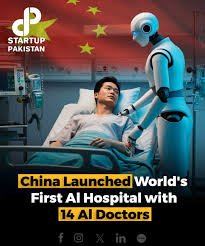
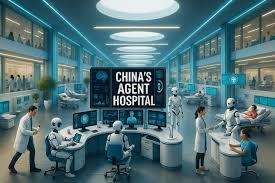
In 2024, Tsinghua University made headlines with the launch of the world’s first AI Hospitals in China. This innovative concept blends virtual AI agents, clinical care, and real-world pilot deployment into a fully integrated system.
At the heart of Agent Hospital is MedAgent-Zero, a self-evolving AI framework developed by Tsinghua’s Institute for AI Industry Research.
In November 2024, the “Zijing AI Doctor” was launched by Tsinghua spin-out Zijing Zhikang. This system includes:
Artificial Intelligence in Autonomous Vehicles: Applications, Companies, Benefits, and Challenges
- 42 AI doctors across 21 clinical specialties
- Coverage for over 300 diseases
- Virtual agents trained on 10+ common conditions per specialty
- 500,000 synthetic patient cases to refine diagnostic accuracy
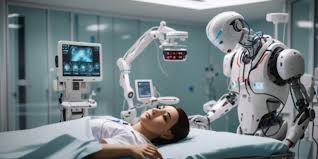
These AI doctors can treat 10,000 patients with 93% accuracy in days, a feat that would take human doctors years.
Note: These AI systems are not simple chatbots; they function autonomously in a closed-loop ecosystem, working with AI-generated patients.
Internal Testing and Public Deployment
In November 2024, AI Hospitals in China system underwent internal testing, using simulated patient data and clinical workflows to optimize AI performance. Following successful simulations, the system moved to public pilot testing, which significantly exceeded internal testing benchmarks.
The inauguration of Tsinghua Agent Hospital in April 2025 marked the transition to public deployment. During this event, collaboration with Chang Gung Hospital was announced, emphasizing China’s commitment to integrating AI into real-world clinical care.
AI doctors now assist in multiple specialties, including:
- Ophthalmology
- Respiratory medicine
- Radiology
They streamline workflows, provide real-time recommendations, and expand access to healthcare, particularly in underserved regions.
Educational Integration at Tsinghua
Beyond clinical care, the AI system will serve as a platform for training the next generation of AI-collaborative physicians. Students at Tsinghua University will learn to work alongside AI, preparing them for future healthcare environments where human and AI doctors operate collaboratively.
Beijing Tsinghua Chang Gung Hospital Expansion
May 2025 marked the Phase II expansion of Beijing Tsinghua Chang Gung Hospital:
- Added 500 new beds
- Capacity increased to 1,500 inpatients and 10,000 outpatients daily
While the physical infrastructure grew, the digital layer is the real story. AI now supports nearly every step of the patient journey, including:
- Digital admissions
- Predictive alerts
- Infusion management
- Diagnostics
- Mobile nursing stations
The AI Hospitals in China also partnered with Tsinghua Academy of Arts and Design to incorporate “healing architecture”, blending technology with cultural and human-centered design principles.
This represents a complete rethinking of hospitals, where AI, clinical need, and design philosophy converge.
The Strategic Importance of AI in Healthcare
The evolution of Agent Hospital and systems like DeepSeek reflects China’s broader healthcare strategy:
- Agent Hospital: Building entirely new AI-integrated hospital models
- DeepSeek: Retrofitting intelligence into existing hospitals
Healthcare AI is a national priority in China, aimed at addressing:
- Physician shortages
- Aging population
- Uneven access to quality care
Challenges and Questions
Despite the progress, several questions remain:
- Can AI doctors be trusted for clinical decision-making?
- Will rural hospitals have access to AI healthcare at the same pace?
- Are existing regulations prepared for AI-driven clinical practice?
While answers are evolving, China continues to actively implement AI in healthcare, hospital by hospital, model by model.
Pingback: AI in Gastroenterology Research and Clinical Insights 2026
Pingback: When Will Self Driving Cars Become Mainstream 10 Key Points