
Autonomous or self-driving vehicles (AI in autonomous vehicles) are rapidly transforming the global transportation landscape. Although the concept dates back to the early 20th century, major technological progress began in the 2010s when companies like Google and General Motors (GM) made substantial investments in autonomous driving technology.
These vehicles aim to enhance road safety, optimize fuel efficiency, and improve decision-making in real time. Central to this innovation is Artificial Intelligence (AI), which enables vehicles to perceive their environment, analyze road situations, and make autonomous decisions without human input.
This article explores the applications of AI in autonomous vehicles, their current state, leading industry players, benefits, and the ongoing challenges in achieving full automation.
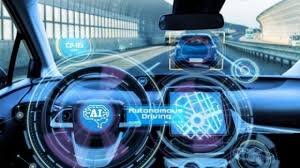
Current State and Future Outlook of Self-Driving Technology
Over the past decade, advances in Artificial Intelligence (AI), Machine Learning (ML), and Deep Learning (DL) have revolutionized self-driving car development. Engineers now leverage AI algorithms to tackle complex problems like scene perception, motion control, path planning, and behavior arbitration.
The Society of Automotive Engineers (SAE) defines six levels of vehicle automation, ranging from Level 0 (no automation) to Level 5 (full automation):
- Level 1: Basic driver assistance features like cruise control.
- Level 2: Advanced features such as adaptive cruise control, lane-keeping, and AI-assisted steering.
- Level 3: Conditional automation, allowing vehicles to handle most driving tasks under certain conditions.
- Level 4: High automation within limited environments or weather conditions.
- Level 5: Fully autonomous vehicles requiring no human involvement.
Currently, only a few companies in North America and Europe have authorization to operate Level 3 autonomous vehicles publicly.
MIT MSRP Internship 2026
Leading Companies Developing Self-Driving Cars
The race to dominate the autonomous vehicle (AV) market involves automakers, AI research firms, and innovative startups. Here are some of the top companies shaping the future of self-driving transportation:
Waymo (Alphabet Inc.)
A pioneer in the industry, Waymo develops vehicles using advanced AI vision systems and machine learning algorithms. Its technology enables vehicles to detect pedestrians, follow traffic rules, and respond safely to real-world road conditions.
Tesla
Tesla’s Autopilot and Full Self-Driving (FSD) features use deep neural networks for object detection, depth estimation, and motion prediction. The company’s AI-driven software constantly learns from millions of real-world driving data points.
Cruise (General Motors)
Cruise applies complex ML models and continuous learning frameworks to improve real-time decision-making in urban environments. It aims to create safer, more efficient transportation systems.
Zoox (Amazon)
Zoox employs computer vision and AI-based perception to analyze surroundings, detect pedestrians, and interpret vehicle signals. Its autonomous taxis are designed for ride-hailing in urban environments.
Pony.ai
Specializing in robotaxis and autonomous trucking, Pony.ai integrates AI into localization, scene perception, and prediction systems.
Other notable players: Baidu, Mercedes-Benz, Motional, and Nvidia are also major contributors to AI-driven vehicle development.
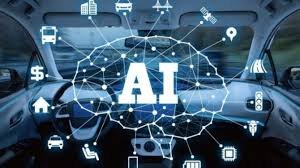
Key AI Technologies in Autonomous Driving
AI enables self-driving cars to perceive, understand, and navigate their surroundings safely. Here are the key applications of AI in autonomous vehicles:
Perception Systems
Autonomous vehicles use lidar, radar, GPS, and cameras to collect environmental data. Computer vision and deep learning algorithms process this data to detect objects, pedestrians, and road signs.
Technologies like Convolutional Neural Networks (CNNs) and Recurrent Neural Networks (RNNs) are essential for accurate 3D environment modeling and decision-making.
Lane Detection and Changing
AI enables vehicles to identify lanes using segmentation algorithms and spatial-CNNs. For example, Tesla’s Hydranet system assists in lane detection and autonomous lane changing by processing visual inputs in real-time.
Prediction and Decision-Making
Self-driving cars must predict the movements of other road users. AI models such as PredictionNet by Nvidia forecast trajectories using deep neural networks (DNNs), helping vehicles anticipate and respond to dynamic environments.
Washington University Internship USA
AI in Robotaxis
Robotaxis are already operational in cities like San Francisco, Beijing, and Wuhan, providing autonomous ride-hailing services.
Baidu’s Apollo Go plans to deploy 1,000 robotaxis by the end of 2024.
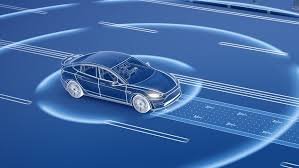
AI-driven robotaxis use 360-degree perception systems powered by cameras and sensors, enabling accurate obstacle detection, path planning, and collision avoidance.
Nvidia supports many robotaxi companies with its centralized AI computing platforms, capable of running generative AI and natural language processing (NLP) for interactive passenger experiences.
AI in Autonomous Mass Public Transport
AI is revolutionizing public transport systems through autonomous buses (robobuses) and intelligent traffic management.
Companies like WeRide and Pix Moving are developing self-driving shuttles operating in controlled environments, such as campuses and resorts.
These vehicles rely on AI for navigation, energy optimization, docking precision, and V2X (Vehicle-to-Everything) communication for fleet management.
Benefits of AI in Autonomous Vehicles
1. Improved Road Safety
AI minimizes human error by continuously monitoring surroundings, making quick decisions, and preventing collisions.
2. Enhanced Mobility
AI-driven vehicles can assist the elderly and disabled by offering hands-free, voice-controlled transportation.
3. Reduced Traffic Congestion and Emissions
AI optimizes routes, manages acceleration and braking, and helps lower greenhouse gas emissions.
4. Better Traffic Management
Through V2X communication, autonomous vehicles share real-time data with infrastructure systems to avoid congestion and enhance road efficiency.
Challenges of AI in Autonomous Vehicles
Technical Limitations
Challenges include limited processing power, perception accuracy, and handling rare or unpredictable “edge cases.”
Regulatory and Legal Issues
Unclear liability in accidents and inconsistent global regulations hinder widespread adoption.
Consumer Trust
Public skepticism persists due to high-profile accidents involving autonomous vehicles. Transparency and safety testing are essential for consumer acceptance.
Ethical Dilemmas
AI systems may face moral decisions—such as choosing between passenger or pedestrian safety in unavoidable crashes—raising ethical concerns that require policy intervention.
Conclusion
Artificial Intelligence has revolutionized autonomous vehicle technology, driving innovations in perception, decision-making, and control. From robotaxis to mass public transport systems, AI continues to reshape how we move.
Pingback: AI Hospitals in China: Tsinghua Agent Hospital 2025 Developments