
Introduction
AI adoption in change management has become a critical priority as artificial intelligence reshapes industries worldwide. While AI technologies continue to advance rapidly, long term success depends less on tools and more on how people, processes, and culture adapt. Organizations that overlook this human dimension often struggle to realize real value from AI initiatives. Change management provides the structure required to ensure AI adoption is effective, scalable, and sustainable.
Table of Contents
What Is AI Adoption in Change Management
AI adoption in change management refers to the structured integration of artificial intelligence while addressing organizational behavior, workflows, and cultural readiness. Unlike basic technology deployment, AI adoption reshapes decision making models, operational processes, and sometimes even organizational hierarchies. This approach creates a practical connection between AI capabilities and day to day business realities.
Without structured change management, even advanced AI systems risk low usage, misinterpretation, or internal resistance. Effective frameworks focus on leadership alignment, communication planning, training programs, and cultural preparedness. For example, deploying an AI driven customer support chatbot requires workforce retraining, redefined service expectations, and trust in automated recommendations. AI adoption in change management ensures technology delivers measurable value through human alignment.
Why AI Adoption Requires Change Management
| Key Area | Impact |
| Human Readiness | Reduces fear and resistance among employees |
| Role Evolution | Clarifies responsibilities in AI supported workflows |
| Adoption Speed | Prevents delays and underutilization |
| Business Value | Protects ROI through structured execution |
AI adoption in change management addresses the human side of digital transformation. Employees may worry about job displacement or distrust AI generated insights. Change management reframes AI as a productivity enabler, highlights growth opportunities, and reduces uncertainty through clarity and engagement.
Neglecting structured change processes often results in stalled initiatives, wasted investment, and poor system utilization. Organizations that skip training, communication, and leadership sponsorship frequently fail to achieve expected outcomes. Implementing AI without change management is comparable to acquiring advanced equipment without understanding how to operate it effectively.
Key Challenges in AI Adoption
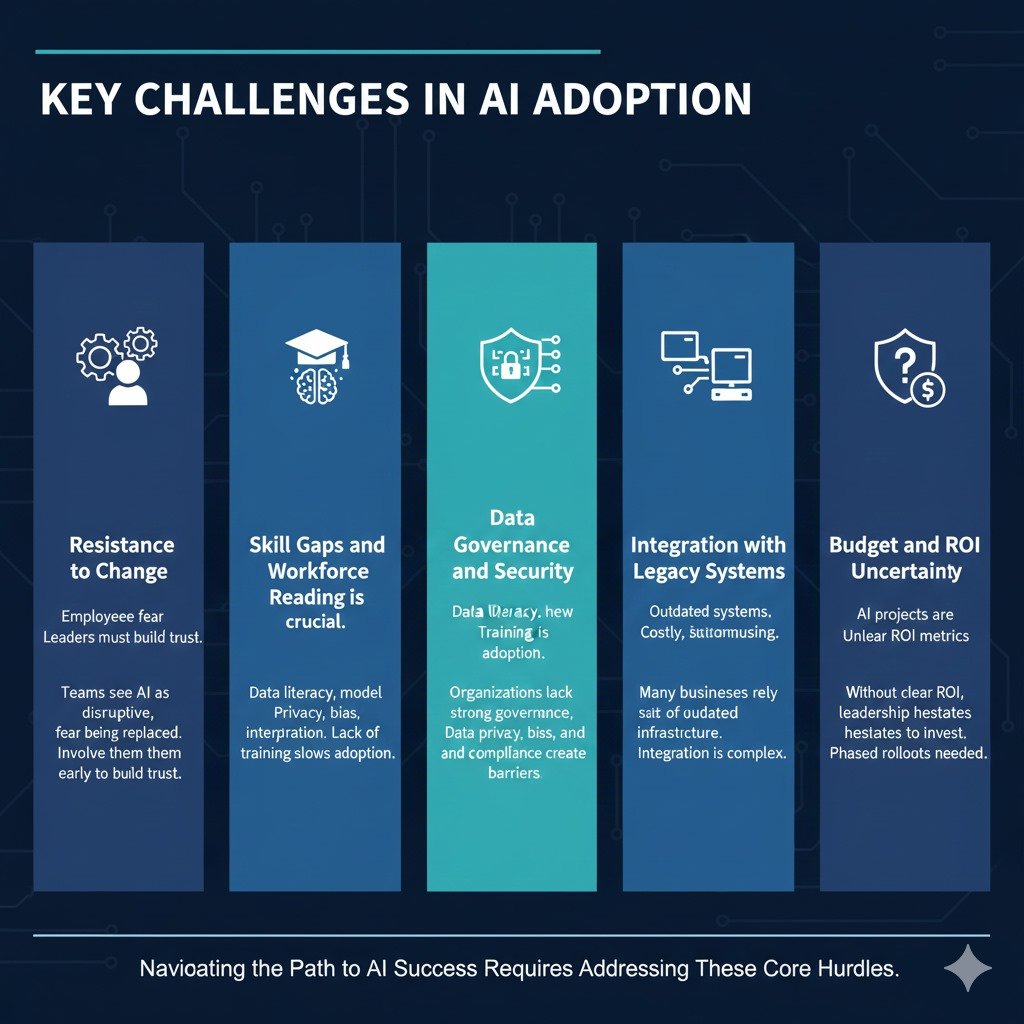
Resistance to organizational change remains one of the biggest obstacles. Employees may perceive AI as disruptive or threatening unless leaders proactively involve them in discussions.
Skill gaps also slow progress. AI requires data literacy, analytical thinking, and system interpretation skills that many workforces lack without targeted training.
Data governance and security concerns further complicate AI adoption. Issues such as privacy, bias, and regulatory compliance can undermine trust if not addressed early.
Legacy system integration presents technical and operational difficulties, increasing cost and complexity. Budget uncertainty and unclear ROI projections may also reduce executive confidence in scaling AI initiatives.
Also Check: Will Artificial Intelligence Replace Doctors in the Future 2025
Benefits of Applying Change Management to AI Initiatives
| Benefit | Outcome |
| Employee Engagement | Higher trust and adoption levels |
| Transition Efficiency | Faster and smoother implementation |
| ROI Optimization | Better alignment with business goals |
| Risk Reduction | Lower chance of project failure |
Organizations that prioritize AI adoption in change management experience stronger employee buy in, faster adoption rates, and improved financial returns. Structured approaches minimize disruption while maximizing value creation.
Core Principles of AI Change Management
Leadership alignment ensures a unified vision and consistent messaging across the organization. Transparent communication reduces uncertainty by explaining how AI affects roles and workflows.
Training and capability development build confidence and competence among employees. Continuous feedback mechanisms allow organizations to adapt strategies as conditions evolve, keeping AI adoption aligned with operational needs.
How to Build an AI Change Management Strategy
| Step | Action |
| 1 | Assess organizational readiness |
| 2 | Define objectives and success metrics |
| 3 | Form cross functional leadership teams |
| 4 | Design phased adoption roadmaps |
| 5 | Deliver role based training programs |
| 6 | Establish monitoring and governance |
This structured approach enables controlled experimentation, risk reduction, and scalable implementation across departments.
Best Practices for Leading AI Driven Change
Start with pilot initiatives to validate assumptions in a low risk environment. Focus on early wins to demonstrate value and build momentum. Engage stakeholders at all organizational levels and use data driven evidence to communicate impact and progress.
Case Studies of Successful AI Change Management
| Industry | Use Case | Result |
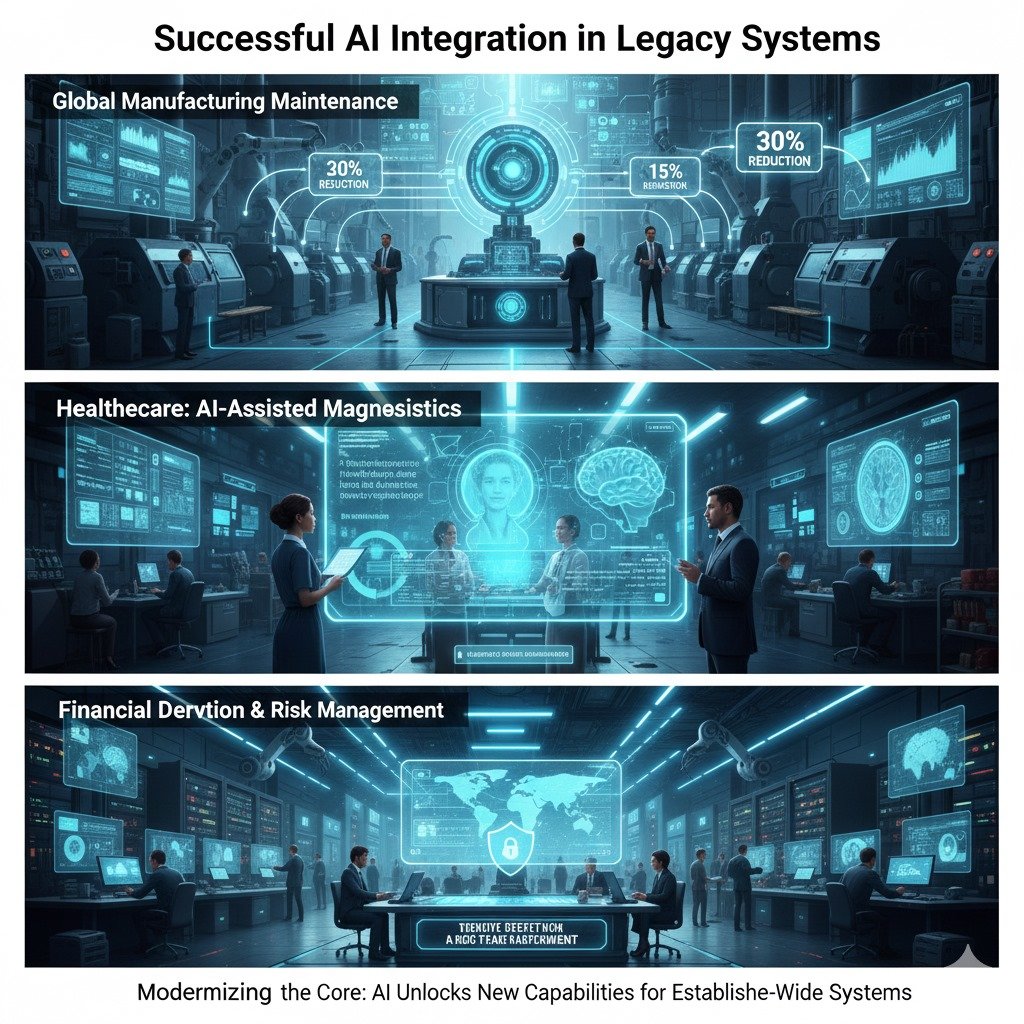
| Finance | Customer service automation | 40 percent faster response times |
| Manufacturing | Predictive maintenance | 25 percent downtime reduction |
| Healthcare | AI diagnostics support | Improved accuracy and efficiency |
These examples highlight how structured change management enables trust, adoption, and measurable outcomes.
Future Trends in AI Adoption and Change Management
AI governance frameworks will become essential to ensure ethical use and regulatory compliance. Human AI collaboration models will expand as AI increasingly supports rather than replaces workers. Organizations must also adapt continuously as global regulations around AI evolve.
Tech2Innovation Role:
Tech2Innovation focuses on practical execution rather than theoretical discussion. Our content breaks down AI adoption in change management into actionable steps, realistic challenges, and decision focused guidance. We emphasize human alignment, leadership accountability, and measurable outcomes so readers understand not only what to implement, but how to sustain AI initiatives in real organizational environments.
Unique Tips to Succeed in AI Adoption Roles
Position yourself as a bridge between technical teams and business leaders. Develop the ability to translate AI capabilities into operational language executives understand. Professionals who combine change leadership with data awareness stand out in AI driven transformation projects because they reduce friction and accelerate trust.
Frequently Asked Questions
| Question | Summary Answer |
| Leadership role | Vision, sponsorship, communication |
| Overcoming resistance | Early involvement and training |
| Effective training | Role specific and hands on |
| Measuring ROI | Cost savings and productivity gains |
| Best industries | Finance, healthcare, manufacturing |
Conclusion
AI adoption in change management represents a comprehensive organizational shift rather than a standalone technology upgrade. Successful implementation depends on leadership vision, workforce readiness, structured communication, and continuous learning. When people are prepared and aligned, AI delivers lasting business value, improved efficiency, and sustainable growth.
Follow our Social Media: Tech 2 Innovation (@Tech2Innovate) / X