
Introduction
One of the most urgent global challenges today is close the education gap that separates privileged learners from millions of children in underserved regions. Across developing countries limited access to quality teachers learning materials and safe schools continues to restrict educational progress. As digital transformation accelerates many experts now question whether artificial intelligence can offer a scalable and sustainable solution. With its ability to personalize learning automate instruction and expand access artificial intelligence is increasingly viewed as a powerful tool for addressing inequality in education systems worldwide.
Table of Contents
What Is the Education Gap
The education gap refers to the unequal distribution of educational opportunities outcomes and resources among students from different socioeconomic and geographic backgrounds. While students in affluent communities benefit from modern classrooms updated curricula and trained educators children in low income regions often rely on overcrowded schools outdated textbooks or informal learning environments.
Several interconnected factors widen this divide. Poverty restricts access to digital devices nutritious food and transportation. Weak infrastructure including unreliable electricity and limited internet access further disrupts learning. In many regions teacher shortages force a single instructor to manage multiple grade levels simultaneously reducing learning effectiveness.
The consequences extend beyond the classroom. Students affected by the Close the Education Gap face long term challenges such as unemployment reduced income and limited social mobility. At a national level educational inequality slows economic growth weakens institutions and deepens social divisions. Addressing this issue is essential not only for fairness but also for sustainable global development.
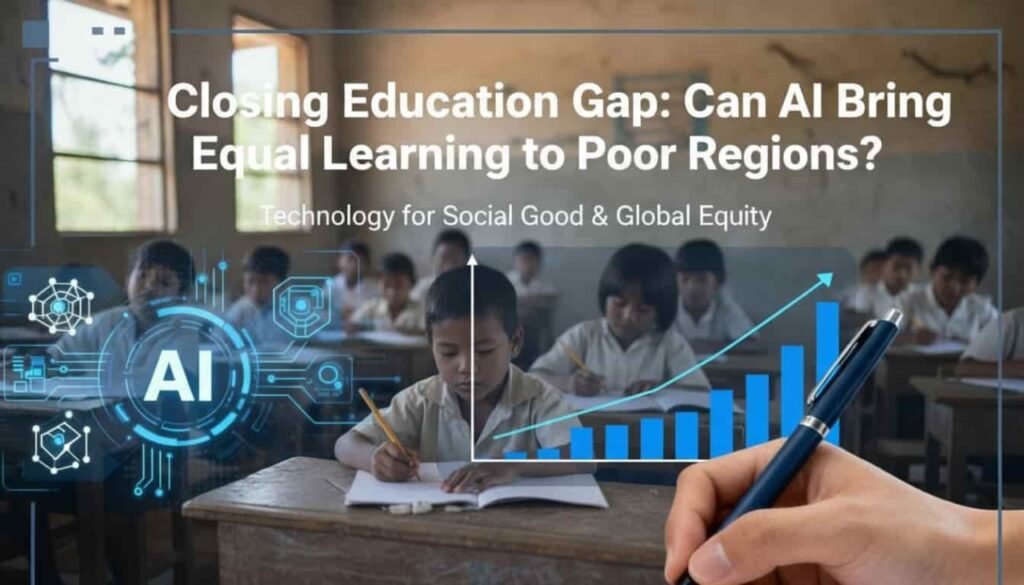
Education Gap Overview Table
| Aspect | Description |
| Main Issue | Unequal access to quality education |
| Primary Causes | Poverty infrastructure teacher shortages |
| AI Role | Personalization accessibility scalability |
| Key Beneficiaries | Students teachers underserved regions |
| Long Term Impact | Economic growth social equity |
What Role Can AI Play in Education
Artificial intelligence can Close the Education Gap is already transforming multiple industries and education is no exception. When applied strategically AI introduces personalization accessibility and scalability which are often missing in under resourced education systems.
Personalized learning is one of the most impactful contributions of AI. Traditional classrooms follow a uniform teaching pace that does not suit every learner. AI powered platforms adapt lessons in real time based on individual strengths weaknesses and learning speed ensuring students receive the support they need.
Accessibility is another critical advantage. In regions with limited teachers AI applications can deliver lessons in local languages translate content and offer interactive learning experiences. Students in remote or rural areas gain access to quality instruction that would otherwise be unavailable.
Scalability further strengthens AI potential. Once developed AI learning tools can reach thousands of learners through low cost devices and offline solutions. Teachers also benefit as AI Close the Education Gap automates grading attendance and progress tracking allowing educators to focus on mentorship and student engagement.
AI is not designed to replace teachers but to support them. By improving efficiency and reach artificial intelligence contributes meaningfully to closing education gap across diverse learning environments.
Also Check: Can AI Bias in Hiring Complete Analysis 2026
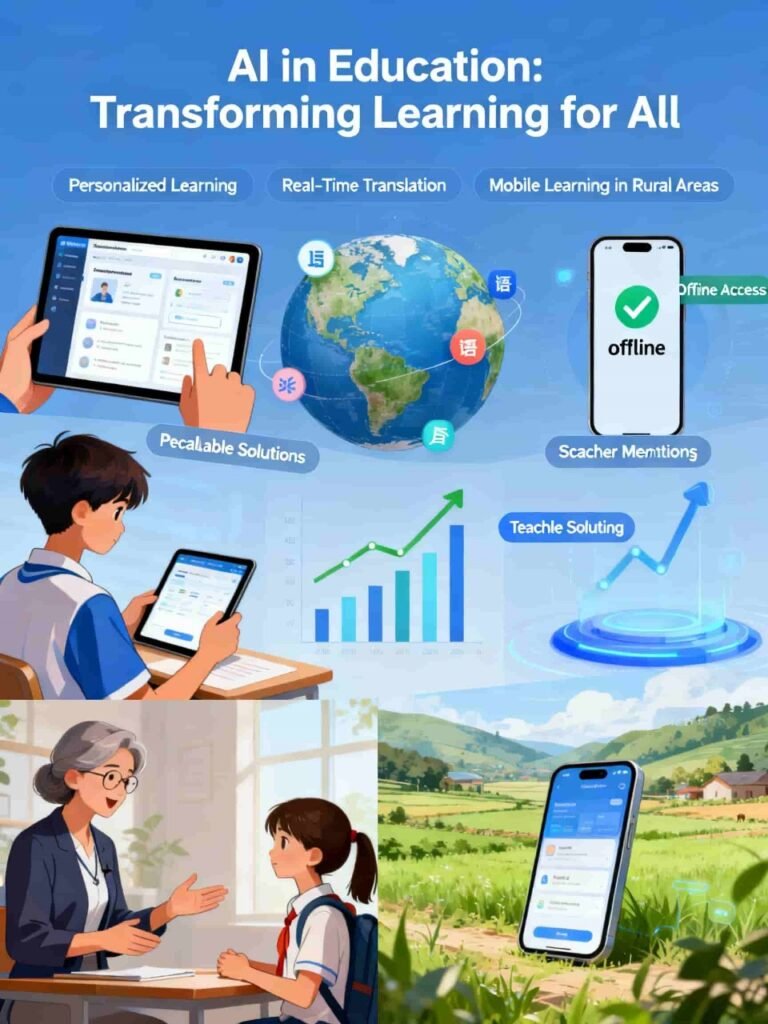
Benefits of AI Close the Education Gap for Poor Regions
Expanding Access to Quality Educational Content
AI platforms host extensive libraries of lessons exercises and assessments that can be accessed via smartphones or tablets. Offline functionality ensures learning continues even without stable internet connectivity making AI effective in remote regions.
Supporting Teachers With AI Powered Tools
In many underdeveloped areas educators manage large classrooms with minimal support. AI assists by handling administrative tasks generating progress reports and offering instructional recommendations. This allows teachers to dedicate more time to direct student interaction.
Personalized Learning for Diverse Student Needs
AI systems continuously analyze student performance and adjust instruction accordingly. Learners who struggle receive additional support while advanced students are challenged further. This adaptability plays a vital role in reducing learning disparities.
Cost Effectiveness and Scalability
Traditional education models require substantial investment in buildings textbooks and staff. AI solutions once implemented can be distributed at low cost to large populations making them ideal for resource constrained regions.
Challenges of Using AI in Poor Regions
Lack of Infrastructure and Connectivity
AI tools depend on electricity devices and connectivity. In rural areas these essentials are often absent. Innovative approaches such as solar powered devices and offline applications are required.
Limited Digital Literacy
Both teachers and students need training to use AI effectively. Building digital skills is essential for ensuring AI adoption contributes positively to learning outcomes.
High Costs of Initial Deployment
While scalable over time the initial costs of devices training and infrastructure remain significant. Strategic investment from governments and international organizations is necessary.
Risks of Bias and Cultural Misalignment
AI systems developed without local context risk excluding learners. Content must reflect cultural values languages and real world experiences to ensure inclusivity.
How to Implement AI Solutions Effectively
Building Affordable Localized Infrastructure
Shared digital learning centers offline platforms and renewable energy solutions enable AI access even in remote communities.
Partnerships With NGOs Governments and Tech Companies
Collaboration ensures resources expertise and policy alignment. Successful implementation depends on coordinated efforts across sectors.
Teacher Training and Capacity Building
Empowering teachers with AI skills strengthens classroom effectiveness. Educators remain central to meaningful learning experiences.
Inclusive and Culturally Relevant Content
AI learning materials must reflect local contexts. Relatable examples improve engagement and comprehension among learners.
Monitoring and Evaluation
Continuous assessment ensures AI programs remain effective and adaptable. Data driven evaluation supports long term success.
Real World Examples of AI in Education
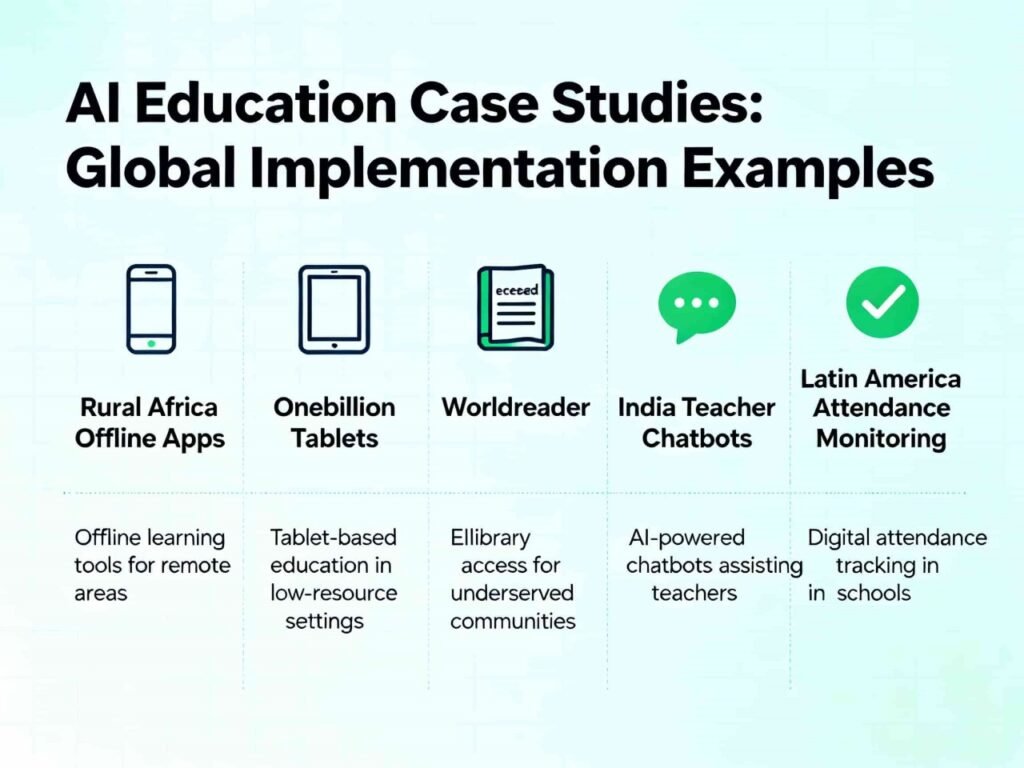
In parts of Africa A (Close the Education Gap) I powered mobile applications have improved literacy and numeracy through short daily lessons. Programs like One Billion and World reader distribute AI enabled tablets and digital libraries in local languages.
Governments are also experimenting with AI. In India AI assistants support lesson planning while Latin American initiatives use AI to track attendance and identify at risk students. These examples demonstrate the real potential of AI when applied responsibly.
Tech 2 Innovation Role:
Tech2innovation plays an essential role in presenting how artificial intelligence can address educational inequality by transforming complex research into clear actionable insights. This article on tech2innovation goes beyond surface level discussion by examining benefits challenges implementation strategies and real world examples in one comprehensive resource. Unlike many platforms that focus only on technology this post emphasizes human centered education and cultural relevance. Tech2innovation highlights practical solutions that policymakers educators and NGOs can realistically adopt. By connecting innovation with social impact the platform ensures readers understand both the promise and responsibility of using AI in education. This approach positions tech2innovation as a trusted source for meaningful technology driven change.
Future Outlook
The future of AI in education is promising but requires balance. While technology enhances personalization and access it cannot replace human connection. Combining skilled educators with intelligent tools offers the most effective path forward.
As devices become more affordable and connectivity expands AI adoption will continue to grow. With coordinated global efforts artificial intelligence can become a key driver in closing education gap and ensuring equal learning opportunities for future generations.
Follow our Social Media: Tech 2 Innovation Facebook Page